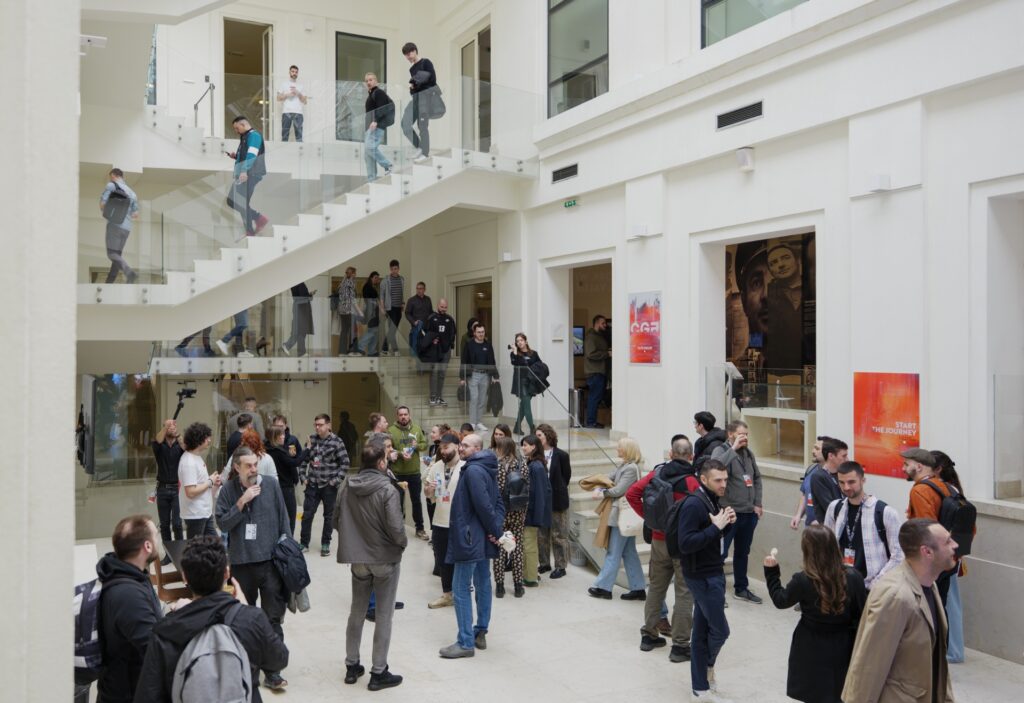
The landscape of computer graphics and all related industries would not be possible to imagine without a powerhouse like Autodesk. This is why we at CGA Belgrade are honored to have their support year after year in different roles, including the most recent, our Diamond Partner.
In 2025, the Autodesk crew came to CGA Belgrade to share insights and expertise on some of their most beloved tools, like Autodesk Maya, its Bifrost plug-in for creating custom effects and powerful USD workflows. They also introduced us to the latest features in their palette, such as Autodesk Flow Studio (formerly Wonder Studio), an innovative AI toolset that can turn any footage into live-action animated scenes, or an array of Goalem products that make it easy to build a crowd of directable digital characters. These were followed by breakdowns of some high-profile projects such as Game of Thrones.
Overall, Autodesk brought an outstanding group of speakers. For Roland Reyer, this was his third CGA, and though much has changed since his last visit, he was again focused on Bifrost. John Paul Giancarlo was also back for the second time around, so our attendees got a chance to learn about Maya and its production pipelines.
Find sessions from the previous years featuring Roland Reyer and John Paul Giancarlo on our YouTube channel.
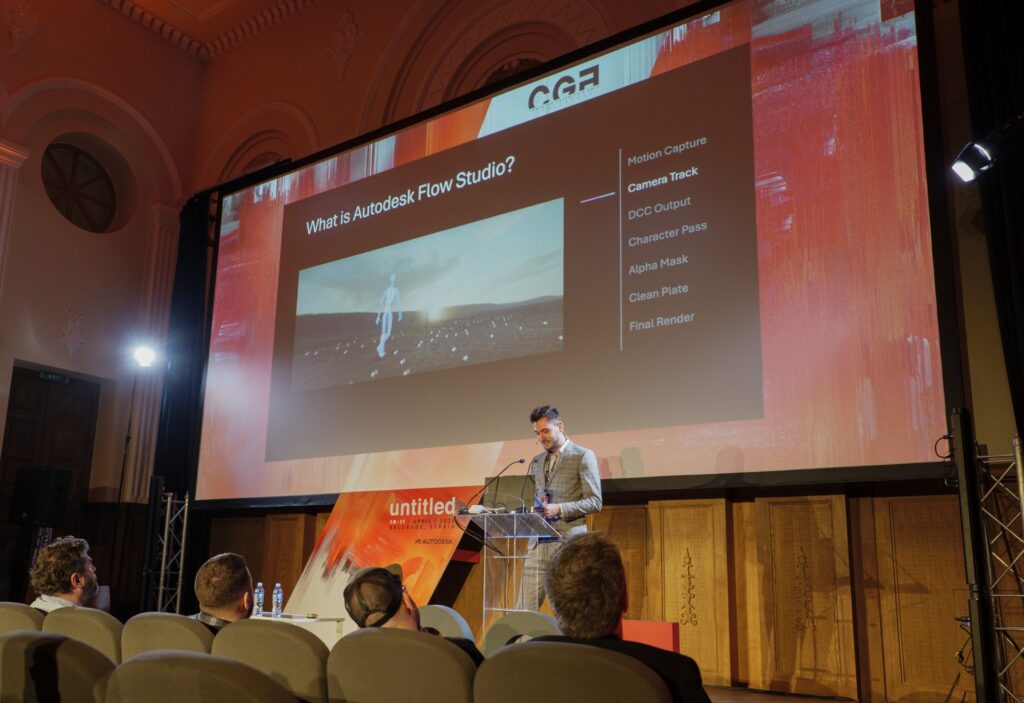
On the other hand, this would be the first CGA for Nicolas Chaverou of Goalem (now an Autodesk company). This award-winning virtuoso on crowd simulation delivered two talks to show us how crowds were manipulated in Game of Thrones and other cinematic gems. Finally, on the stage of our main conference track, we were honored to introduce Milutin Sekulić of Wonder Dynamics, an Autodesk company, known for its innovative AI-powered VFX software that provides body and facial animation, lighting, and camera tracking data that works with various tools for content creation.
Milutin Sekulić at the main conference stage
Yet, this was not our first introduction to either this innovative tool or to Milutin. Once a knowledge-thirsty student at the Faculty of Technical Sciences in Novi Sad, Milutin is now an experienced Machine Learning Engineer at Autodesk. His first encounter with the world of VFX came at the inaugural CGA Belgrade. When our conference launched on a smaller scale in 2017, the Autodesk team, led by Nikola Milošević, Senior Product Manager, was there to kick things off and be the first to support us. The team also shared generous insights into color management and developments behind their 3D tools, which strongly resonated with students and younger participants. Nikola now fondly remembers this encounter – here’s how he described it:
“I was genuinely surprised, here was a student asking deeply technical yet customer-focused questions… That really stuck with men. I even said that he had a great future ahead, and I wasn’t just being polite. I remember calling out a few seasoned professionals in the room, pointing out how his question matched, if not exceeded, the complexity you’d expect from someone with much more experience.”
Today, Milutin states that his experience at the first CGA helped him choose his career path, eventually leading him to contribute to Autodesk Flow Studio.
It is striking to witness the Autodesk team now exploring the transformative power of AI, especially considering that at the previous edition of our conference, Eric Bourque, VP of Content Creation at Autodesk, offered a visionary perspective on the future trajectory of the creative industries:
“I think, when we look to the future, what’s really important is to try to take the technology away from the art. I think, looking forward, what becomes interesting is how artificial intelligence comes into this equation. Because I think artists are used to tuning things they understand, and with AI, they’re tuning things, but it’s kind of a black box. And so, how do we learn to use those black boxes to sort of get the ideas out of our heads to create compelling images?”
Both Autodesk and CGA share a deep commitment to supporting young talent, expanding the creative community, and fostering knowledge exchange. Together, we continue to create spaces where emerging creators can learn, connect, and grow, empowering the next generation to shape the future of Media and Entertainment.
Autodesk’s Media and Entertainment software collection includes some of the most popular tools for 3D modeling, visual effects, and game development, like Maya, Goalem, 3ds Max, Arnold, Mudbox, and MotionBuilder
CGA Belgrade 2025 is taking place on April 10-11th at Yugoslav Film Archive (Jugoslovenska kinoteka), so this is a perfect time to introduce our exclusive sessions for which the seats are limited, and registrations required – so, check the link in the bottom of the page.
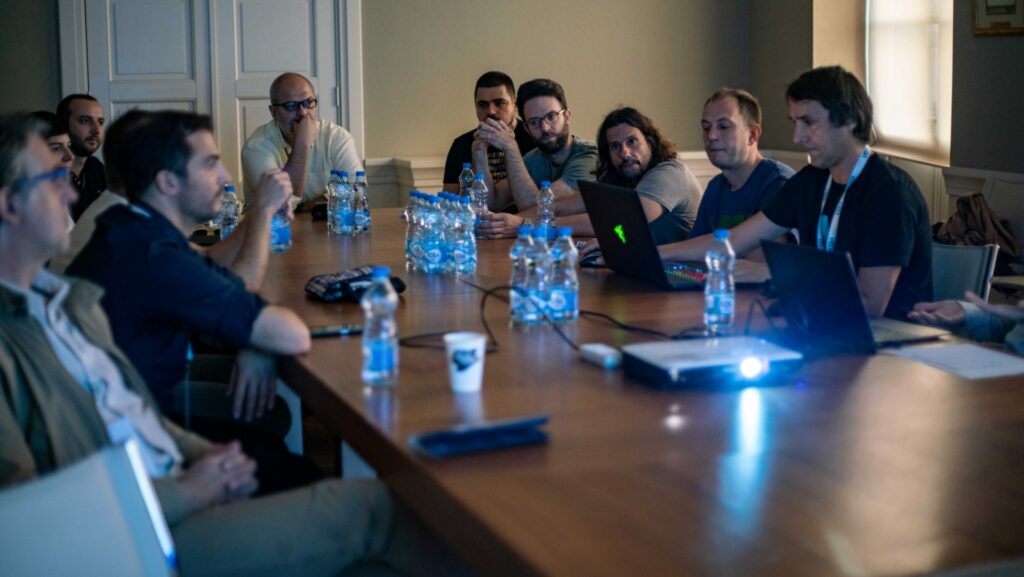
Boardroom Talks at CGA Belgrade 2025 are candid discussions of senior industry members turned into insightful peer sessions. The sessions are designed for decision-makers and professionals navigating the business side of CG and cover a wide variety of topics such as AI and web3 opportunities, marketing in the Metaverse, VFX production strategies, and how it all looks like from the Director of Photography POV. This is also where yet another Belgrade HUG (Belgrade Houdini User Group) will be held.
12:50 – 14:20 | Creative Disruption: AI, Blockchain, and the Evolving Entertainment Landscape
Here we gather senior professionals from Film.io, Nebius, and the Schoenherr Serbia law office with representatives of the Serbian Blockchain Initiative to discuss AI’s impact on storytelling, the balance between automation and artistry, and the evolving role of creators. The talk will explore blockchain’s role in transparency, audience-driven content funding, and AI-powered demand prediction. Legal experts will address copyright, ownership disputes, and the shifting regulatory landscape. Closing with a forward-looking discussion, participants will uncover the key skills and strategies needed to navigate this rapidly evolving creative ecosystem.
As digital landscapes evolve, brands are finding new ways to engage audiences through immersive experiences in the metaverse. Our speakers will explore how interactive platforms, gaming ecosystems, and real-time technology are shaping brand storytelling through various platforms. Therefore, you’ll get an in-depth look at the Fortnite ecosystem and UEFN tools that can help brands build experiences that resonate with digital-first audiences. Speakers will also explore gamification strategies and how brands can foster meaningful engagement through interactive storytelling and collaboration, as well as challenges and opportunities of brand activation in the Metaverse in different markets.
Joel Pilger, Founder & Global Advisor, FORUM (US) Nikola Šoškić, Founder, Shosha Games (RS) Ivica Milarić, Docent, Academy of Arts, Novi Sad (RS)
12:15 – 13:15 | The Producer’s Toolbox: What Works, What’s Hype, and What Saved Your Project
This roundtable explores the full scope of VFX producers’ responsibility — and the tools to do it better. Our speakers will dive into what’s actually working in the field, which tools and workflows are overhyped, and what truly made a difference in critical moments. You’ll learn about the role of a producer in the CGA world, and what skills are required to manage the connection between the client and the artists.
Nevena Tomić, Producer, Fried (RS) Andrew Brassington, VFX Producer, Peerless (GB) Ivan Stančić, VFX Producer, Crater Studio (RS)
13:20 – 14:20 |Belgrade Houdini User Group
This is a user group for the procedural 3D modeling – animation – VFX – game dev software Houdini. We welcome everyone, from Houdini experts to complete beginners who want to get started with Houdini. This group is a mix of visual effects artists, animators, game developers, modelers, VR creators, motion graphics artists, etc. While Houdini is the main focus of this group, we will also be discussing other related 3D software and game engine tools.
HUG Belgrade #5 brings together the all-star team:
Bogdan Amidžić, FX TD, Crater Studio (RS) Hristo Velev, CEO, Bottleship, (BG) Igor Žanić, FX TD, Rebelway (RS) Nikola Damjanov, Principal Technical Artist, Nordeus (RS) Doca Mladenović (DAT)
15:00 – 16:30 | DoPs in the VFX – Framing the Virtual Landscape
Directors of photography share insights and experiences of integrating the potential of VFX into shooting epic film frames. Their experiences on AAA projects will take you from Hollywood to Bollywood and back again while giving you the details of creatively using VFXin their filmmaking processes.
Nikola Vučenović, 2D & VFX Supervisor, Crater Studio (RS) Đorđe Stojiljković, Cinematographer, Filmmaker (RS) Marko Mladenović, Cinematographer (RS)
Important info: All the boardroom sessions are happening in Kinoteka’s Conference Room where the seats are limited, so we advise you to register for the ones you’d like to attend on time.
CGA Belgrade is proud to present the exclusive masterclasses held by some of the leading creative professionals and designed as morning exercises to energize you and equip you with new skills before continuing to the regular part of the programme.
Seats are limited and available on a first-come, first-served basis. To secure your chance to join a masterclass of your choice, get your CGA ticket now and be ready when sign-ups go live. Keep in mind that all the masterclasses of one day will roll at the same time.
Masterclass registrations open on March 31st, but only CGA Belgrade 2025 ticket holders can apply – the link to save your seat on a masterclass of your choice will be delivered via email in due time.
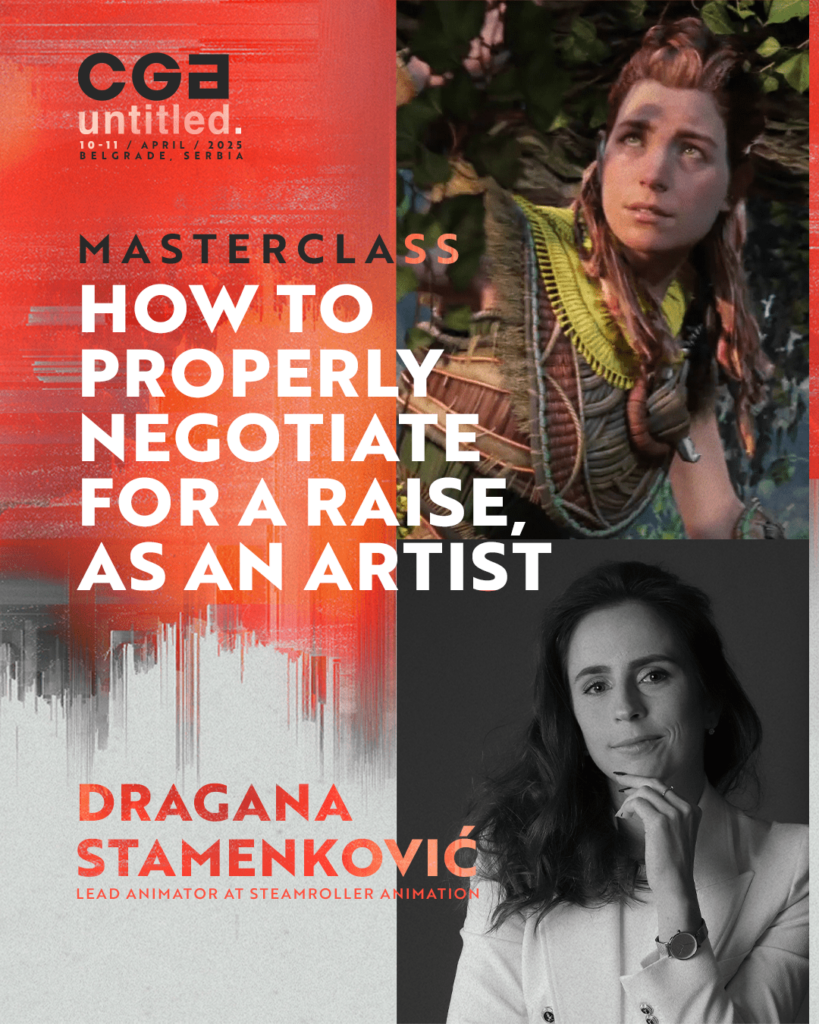
How to Properly Negotiate for a Raise as an Artist
LECTURER: Dragana Stamenković
Lead Animator @ Steamroller Animation
WHO IS THIS FOR:
Artists of all kinds and seniorities including, but not limited to storyboard artists, painters, modellars, riggers, programmers, animators, lighting artists, compositing, and texture artists, sound designers, CFX and VFX artists, etc.
MASTERCLASS ABSTRACT:
Learn how to ask for a raise, a promotion, or any opportunity at your studio — and actually get it. Through role-playing and hands-on exercises, you shall practice making a strong case for yourself and figuring out the best moves for your career as an artist.
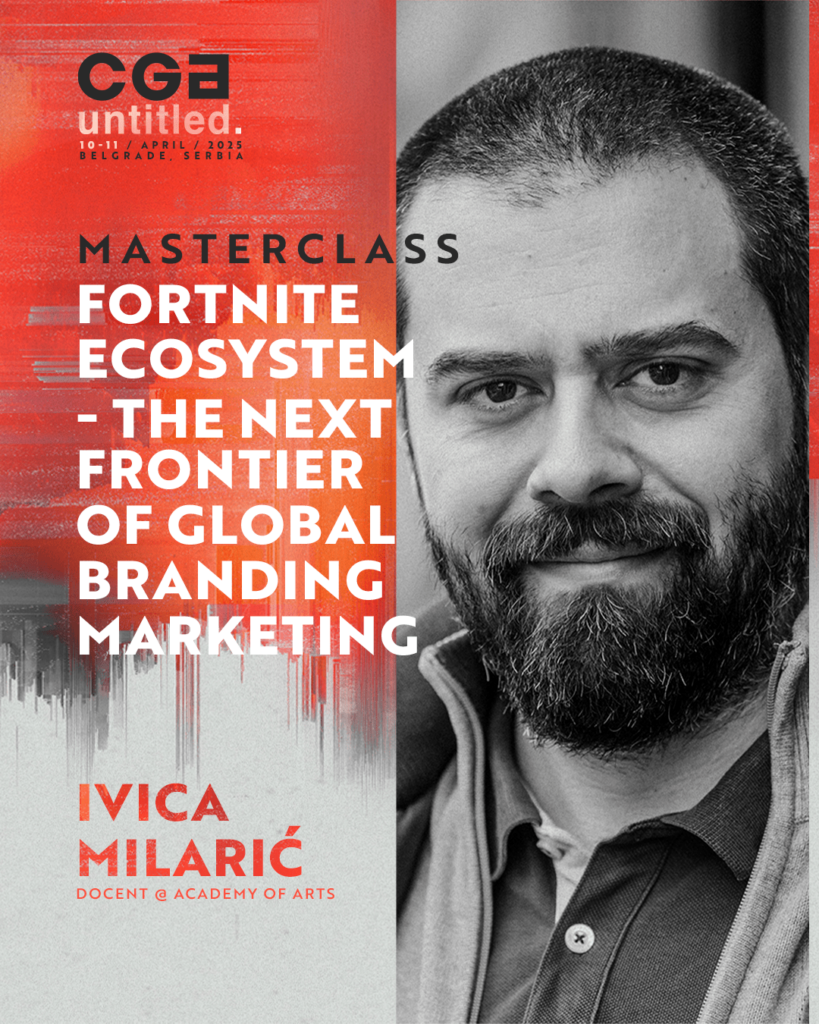
Fortnite Ecosystem – The Next Frontier of Global Branding Marketing
LECTURER: Ivica Milarić
Docent @ Academy of Arts, Novi Sad
Independent Lecturer, Game Designer and Consultant
WHO IS THIS FOR:
Medior to senior marketing executives, CEOs, and creative marketing managers.
MASTERCLASS ABSTRACT:
The ecosystem of Epic Games’ Fortnite and its UGC (user-generated content) tools is rapidly expanding, allowing for the creation of an entirely new space for marketing ventures. Through it, the process of branding-based promotion could hit an entirely new dimension in the coming years.
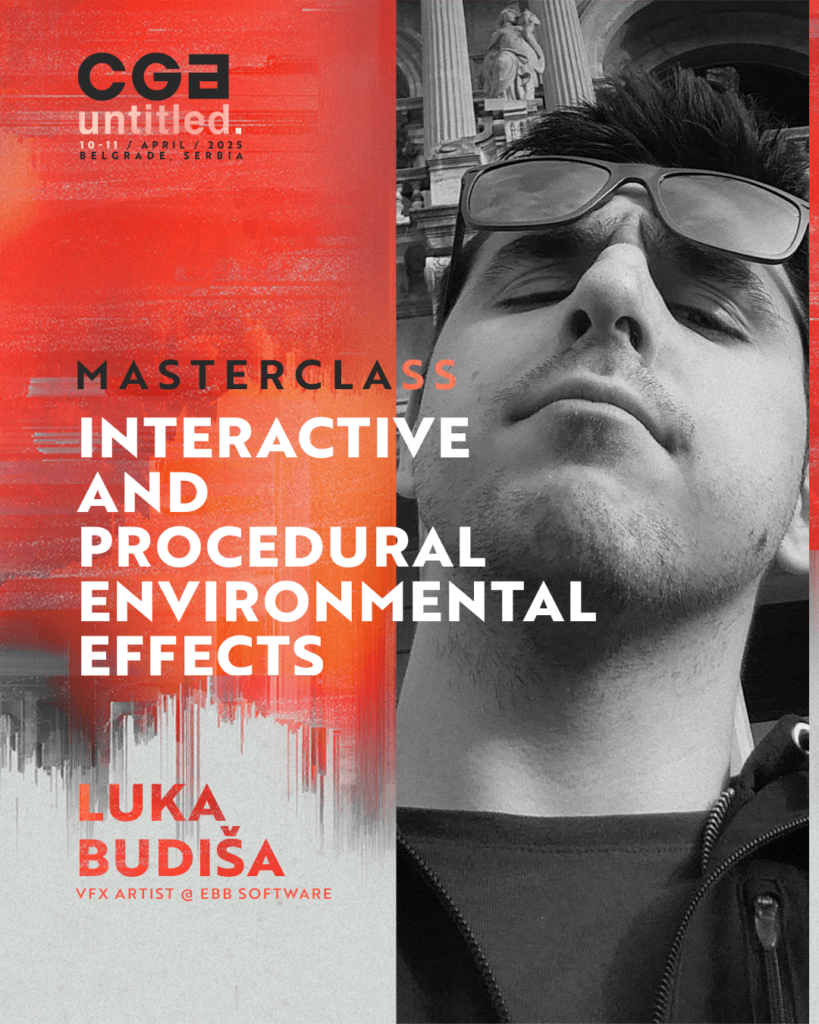
Interactive and Procedural Environmental Effects
LECTURER: Luka Budiša
VFX Artist @ Ebb Software
WHO IS THIS FOR:
Junior to intermediate game developers, VFX artists, environment artists, etc..
MASTERCLASS ABSTRACT:
This masterclass focuses on creating dynamic, easily adjustable VFX that respond to player interactions and environmental conditions. Creating faux-procedural effects, attendees will learn to build interactive effects such as blowing leaves, fog, debris on the floor, that can be tweaked without deep VFX knowledge. The goal is to develop reusable, game-ready effects that designers and developers can integrate seamlessly into their projects, enhancing realism and interactivity.
DAY 2
April 11th
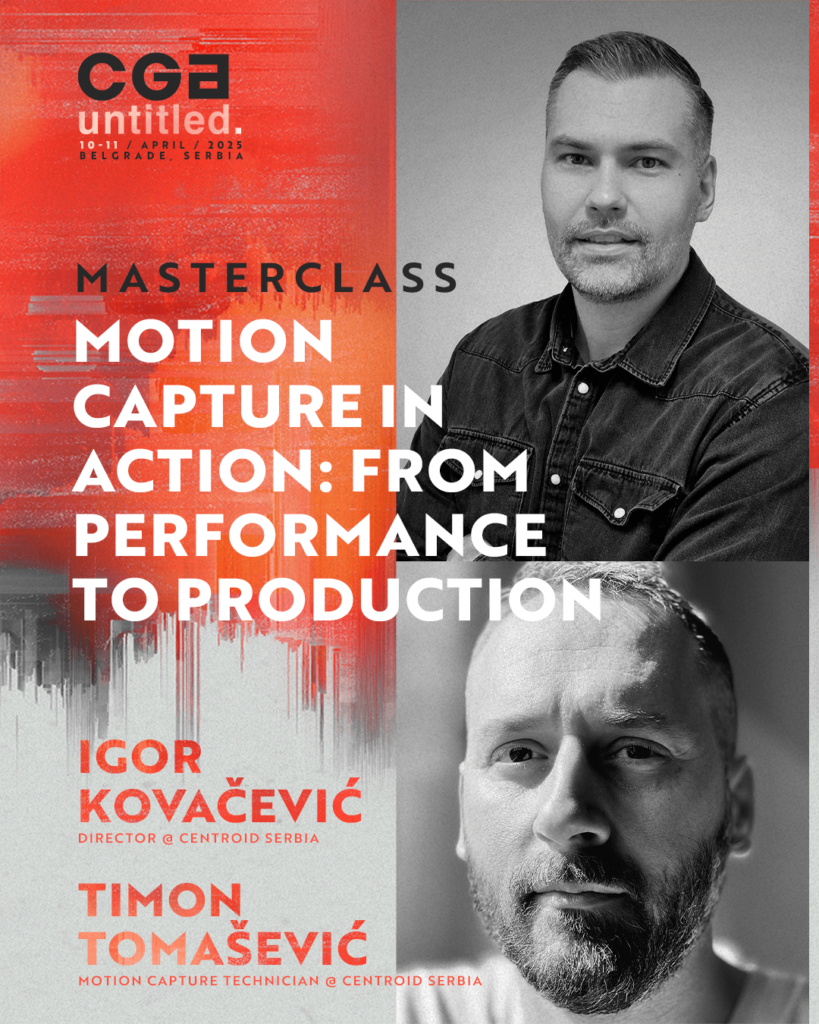
Motion Capture in Action: From Performance to Production
LECTURERS: Timon Tomašević
Motion Capture Technician @ Centroid Serbia Igor Kovačević
Director @ Centroid Serbia
WHO IS THIS FOR:
Artists of all kinds and seniorities including, but not limited to: Game developers (animators, technical artists, game designers); Film & VFX professionals (animators, directors, VFX artists); 3D artists & character animators; students & professionals interested in mocap technology.
MASTERCLASS ABSTRACT:
In this session, our lecturers will showcase the XSENS motion capture system through a live demonstration with a particular focus on sensors, the suit, and software. With the help of an actor, they will demonstrate the process of capturing and processing motion data. Additionally, you will learn about the traditional optical motion capture systems and the key differences between them and the inertial XSENS system. To conclude, the Centroid team will present the final result with a video we created for DJ Marko Nastić, along with other projects we have worked on, illustrating the power of this technology in professional production.
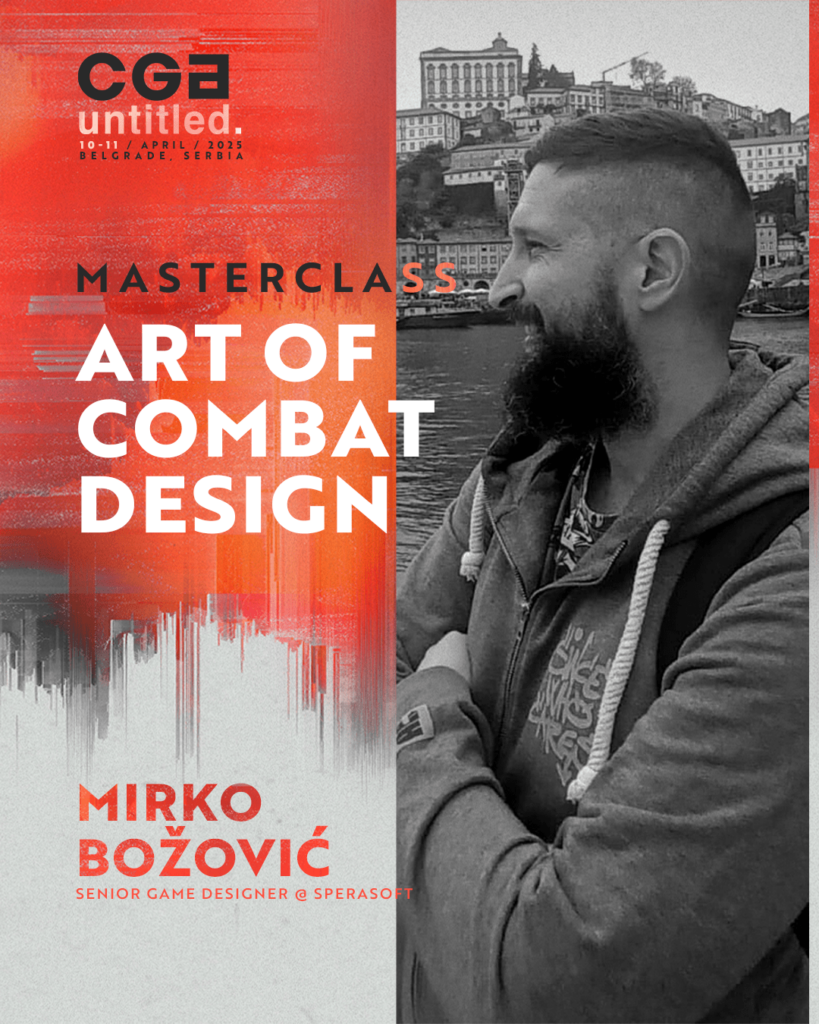
Art of Combat Design
LECTURER: Mirko Božović
Senior Game Designer@ Sperasoft
WHO IS THIS FOR:
Game designers, animators, and VFX artists of all seniorities.
MASTERCLASS ABSTRACT:
Effective combat design relies on seamless collaboration between game designers, animators, and VFX artists to create dynamic and immersive player experiences. Learn how artists can craft combat systems that feel fluid, impactful, and engaging by aligning game mechanics, animations, and visual effects.
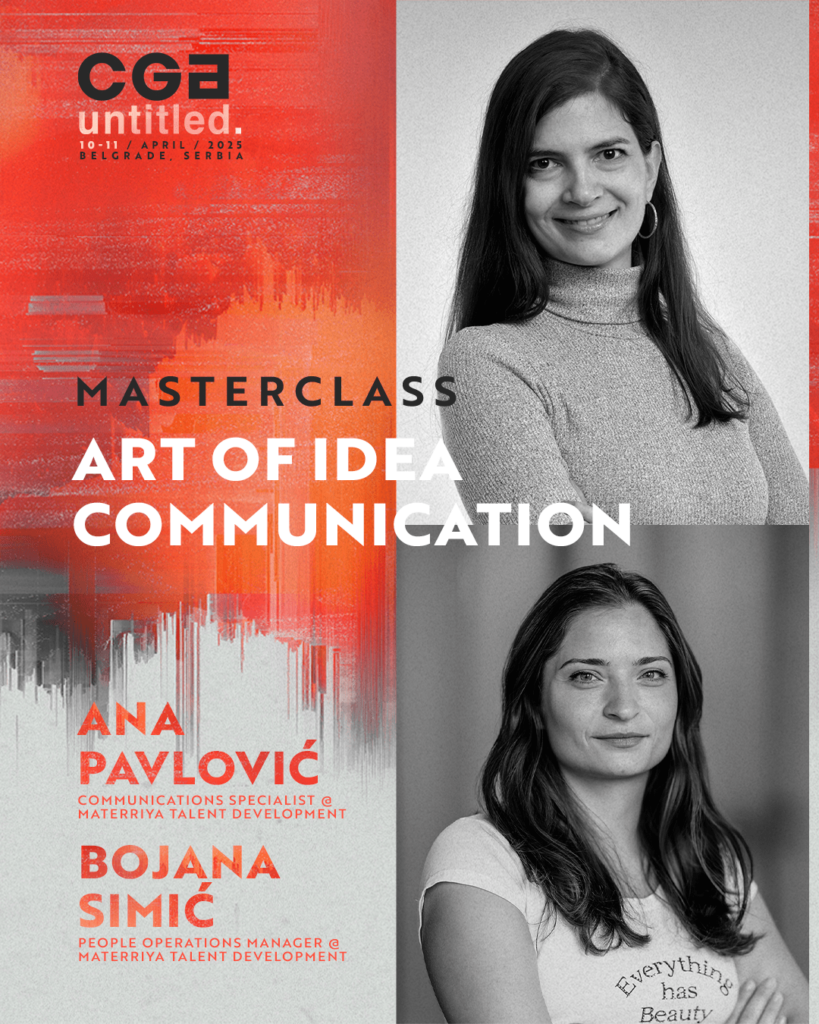
Art of Idea Communication
LECTURERS: Bojana Simić
Materriya Talent Development Ana Pavlović
Materriya Talent Development
WHO IS THIS FOR:
This masterclass primarily targets the artists while also welcoming producers, supporting roles, leads, managers, and business owners who seek to analyze and improve how they communicate ideas across various relationships and environments.
MASTERCLASS ABSTRACT:
This masterclass explores the mechanics of communication: how ideas take shape internally (biologically and cognitively) and what others need to become receptive to your message. By combining theory with hands-on activities, our lecturers explore with participants tools to structure their communication, pitch ideas with confidence, and engage their audience – whether a client, a team, or a community.
* * *
Regular tickets are available until March 28th! Secure your spot now before prices go up!
In April, CGA Belgrade 2025 will return to its roots at the Yugoslav Film Archive (Jugoslovenska kinoteka) and its inspiring and timeless ambiance. This time around, we are spreading our wings to tackle a variety of creative fields and investigate new ideas, workflows, and technologies, some of which are still unconquered – hence the conference theme: Untitled.
The first day is, for the most part, dedicated to AAA projects – yet, in our universe, this means Animation, Advertising, and AI. On the second day, we focus on film post-production, visual effects, motion graphics, and game development.
Over the course of two days (April 10th and 11th) the sessions will be divided into four programme arcs and stages.
So… here’s how the official lineup looks so far – and keep in mind that the list will be updated regularly.
KNOW ALLSTAGE
KNOW ALL, the main conference track is designed to give you a full overview of the hot topics and trends in the world of computer graphics and related fields. Here, some of the leading minds in the industry will deliver inspiring keynotes, industry panels, and artistic insights that explore the intersection of technology and creativity.
A History Of Crowds in VFX
Nicolas Chaverou, Golaem/Autodesk (FRA)
Crater’s Little Black Box
Bogdan Amidžić & Nikola Vučenović, Crater Studio (RS)
From Short Films to the Biggest Screens in the World: Staying Sane and Hungry Aleksandra Todorović, Ilija Brunck & Csaba Letay, Woodblock (DE)
The Creativity Behind Animated Series Agent 203
Damjan Mitrevski, V House Animation (MK)
Cairos.ai – Animation from Conversation
Hristo Velev, Bottleship, (BG)
Co-Developing the world of South of Midnight
Bosko Ognjević, Onyx Studio (SRB)
Small Teams, Big Ideas: Navigating Trends Without Losing Identity
Rade Vukčević, Archangel Enterprises (MNE)
Breaking the Limits: Designing CG Environments for Formula 1 Snezhana Paderina, SNEZHANA.NYC, (RS)
PANELS
How to Work with Brands in Delivering Real Value with CGI
Moderator: Joel Pilger, FORUM (USA)
Miloš Skokić, Žiška (RS)
Jovana Matić, Telekom (RS)
Ilija Brunck, Woodblock (DE)
Ivan Vasiljević, DAT (RS)”
Navigating the Changing Industry Paradigm in the Wake of AI
Moderator: Vitaly Kobyashev, SideFX (GB)
Uroš Sikimić, 3Lateral/Epic Games (RS)
Aleksey Golubitsky, Nebius (GB)
Milan Gospić, Microsoft | The Garage (RS)
Creative Moxie – The Rise of Young Digital Creators
Moderator: Branimir Žugić, Art 365/CIM forum (MNE)
Lena Glišović, Radionica KRUG – Glitch Studios (RS)
Jovan Manić, GOE Craft (RS)
Anđela Joković, SlipperySlope (RS)
Nikola Adamović, SGA (RS)
FILM SCREENINGS
Volja sinovljeva (Son’s Will, 2024): Episode 1 (exclusive TV show pre-premiere + discussion with the film crew)
The KNOW-HOW sessions will dig deep into the technical processes, skills, and production workflows; they are designed for artists and producers, no matter their seniority. Sessions will cover best practices in USD workflows and open-source formats, rigging and modeling in Bifrost, procedural world-building, crowd simulations, and search for new frontiers in building digital worlds.
TALKS
The Crowds of Game Of Thrones Nicolas Chaverou, Golaem/Autodesk (FRA)
Maya to Unreal Engine USD Workflows
John Paul Giancarlo, Autodesk (ES)
Modeling, Rigging, Animation and VFX in Bifrost
Roland Reyer, Autodesk (DE)
Get Smart with Mari: How to Create & Reuse Smart Materials
Paul Ringue, Foundry (UK)
AI-based Animation Pipeline Development. Semi-automatic mode. New thinking.
Elena Shchichkina, Live and Create Studio (RU/RS)
Alexey Gankov, Animaccord (RU/RS)
Procedural Worldbuilding in Houdini and Unreal
Bogdan Amidžić, Crater Studio (SRB)
3D/4D Reconstructions Using Volumetric Video and Gaussian Splatting for VFX
Sergey Eliseev, Yandex (KAZ)
Georgy Molodtsov, Yandex (RS)
BOARDROOM TALKS
Or, shall we say, DISCUSSION GROUPS aimed at senior industry members providing insightful peer sessions; designed for decision-makers and professionals navigating the business side of CG, this track covers AI and web3 opportunities, marketing in the Metaverse, and VFX production strategies. This is also where yet another HUG Belgrade (Houdini User Group) will be held on the second conference day.
TOPICS
Creative Disruption: AI, Blockchain, and the Evolving Entertainment Landscape
Nemanja Petrović, Partner, Moonstruck (RS)
Andrea Radonjanin, Partner, Schoenherr (RS)
Aleksey Golubitsky, Founder, Nebius (UK)
Stipe Marić, Director, Filmio Studios (CRO)
DoPs in the VFX – Framing the Virtual Landscape
Đorđe Stojiljković, DoP on Kalki 2898 AD (RS)
Marko Mladenović – Cinematographer (RS)
Nikola Vučenović, 2D & VFX Supervisor, Crater Studio (RS)
Brand Marketing in the Metaverse
Joel Pilger, Founder & Global Advisor, FORUM (USA)
Nikola Šoškić, Founder, Shosha Games (RS)
Ivica Milarić, Docent, Academy of Arts, Novi Sad (RS)
Producers Toolbox: What Works, What’s Hype, and What Saved Your Project Andrew Brassington, Peerless (UK)
Nevena Tomić, Fried (RS)
Ivan Stančić, Crater Studio (RS)
CGA is proud to present the exclusive MASTERCLASSES held by some of the leading creative professionals and designed as morning exercises to energize you and equip you with new skills before continuing to the regular part of the programme.
How to Properly Negotiate for a Raise, as an Artist
Dragana Stamenković, Steamroller Animation (RS)
Fortnite Ecosystem – The Next Frontier of Global Branding Marketing
Ivica Milarić, Academy of Arts, Novi Sad (RS)
Interactive and Procedural Environmental Effects
Luka Budiša, Ebb Software
Motion Capture in Action: From Performance to Production
Timon Tomašević & Igor Kovačević, Centroid (RS)
Art of Combat Design
Mirko Božović, Sperasoft (RS)
The Art of Idea Communication
Bojana Simić & Ana Pavlović, Materriya Talent Development (RS)
IMPORTANT INFO!
Masterclass registrations open on March 31st, but only CGA Belgrade 2025 ticket holders can apply.
Seats are limited and available on a first-come, first-served basis – once they’re full, that’s it! To secure your chance to join, get your CGA ticket now and be ready when sign-ups go live. Don’t miss out!
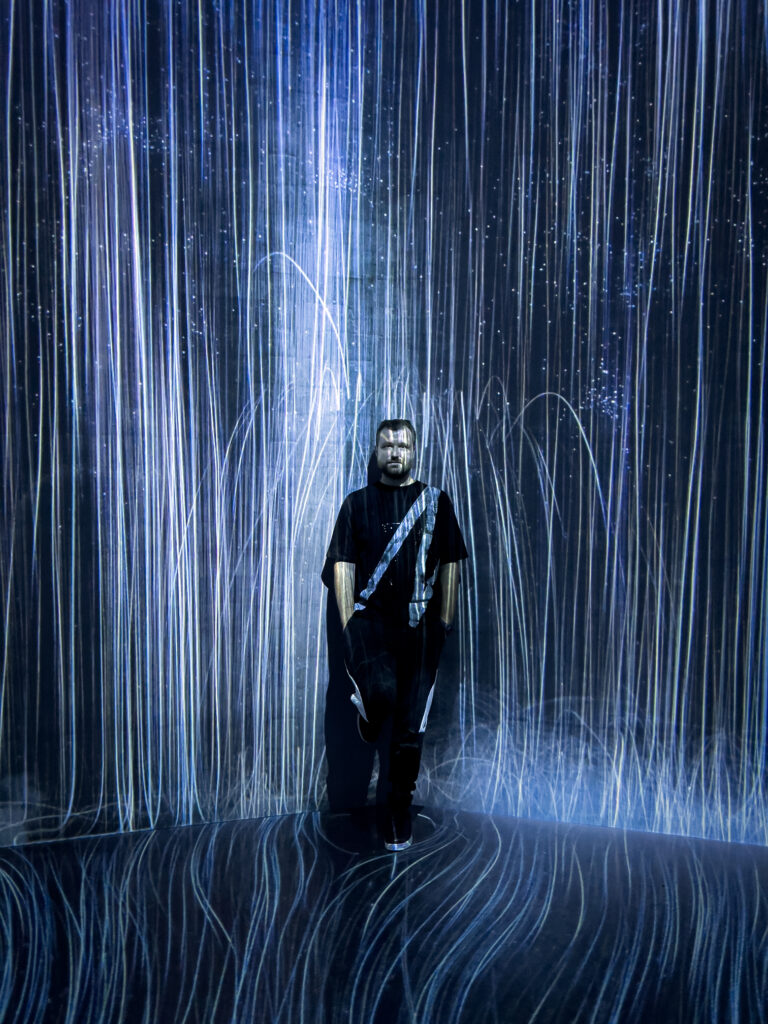
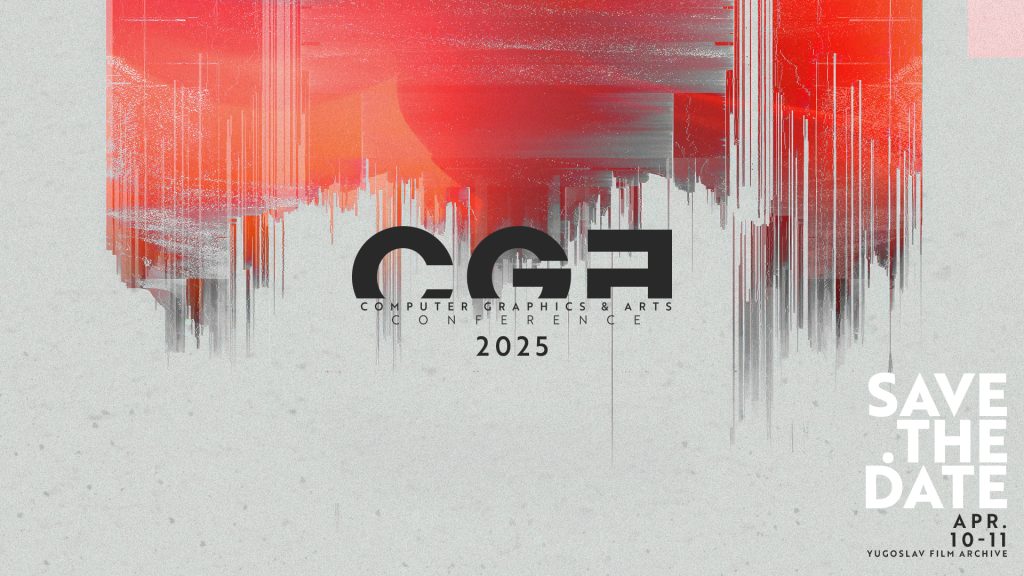
A seasoned artist and designer Dejan Ilićmasterfully combines cutting-edge technology with artistic ingenuity, creating designs that are as immersive as they are captivating. This is why we are proud to call him a mastermind behind CGA Belgrade 2025 bold and unforgettable visual identity.
Far from merely dabbling in modern tools, Dejan wields them with precision, blending tech and art effortlessly – a perfect embodiment of everything CGA stands for. In this interview, we uncover his design journey, his creative process, and his passion for experimentation. Plus, fun fact: creativity runs in the family – his father crafted some of the most recognizable Yugoslavian brands. Trust us, you’d want to stick around for this one!
Dejan Ilic / Private archive
What inspired you to pursue a career in design?
From as far back as I can remember, even before I could speak, I was imagining worlds, constructing ideas in my mind, and longing to bring them to life. My first encounter with a computer, the Macintosh II, at just two years old, felt like stepping into a doorway to infinite possibilities. It wasn’t just a machine; it was a tool that could transform imagination into reality.
My father, a renowned painter who transitioned into graphic design, was my first mentor. His works, ranging from album covers for Bijelo Dugme, Goran Bregović, Korni Grupa to branding for iconic companies and artists like Madonna, Tetra Pak, Novosadska Mlekara…. filled our home with a kind of creative electricity.
He would often ask me, “What would you add or change?” as he showed me his designs in progress. Even as a child, my input found its way into his final works. That experience, seeing something I contributed to take shape and come to life, ignited an unshakable belief in the power of creativity. My mother, on the other hand, brought abstract ideas to life in ways I could see and feel, turning school lessons into visual narratives that helped me understand the world on another level.
My brother, who studied design and art in the USA, introduced me to the realm of brand advertising and cinematic design, taking me to the USA to see the VFX works of students from his academy on movies like The Matrix, The Lord of the Rings, and Finding Nemo. These experiences shaped my creative instincts and also my understanding of storytelling as a universal language.
How did your journey lead you to where you are today?
Graduating from the Academy of Arts in Novi Sad was a transformative chapter in my journey. It provided the foundation for my growth as a designer, equipping me with the tools and knowledge to explore the depths of creativity and innovation.
Looking back, it feels as though my life has always been surrounded by what I call “creative nodes”, pulses of inspiration connecting people, ideas, and possibilities. Winning the award for my experimental poster design called “Dualism” became one of those nodes, marking a significant moment in my career.
It pushed me to explore design as more than a craft, it became a language of expression and innovation. Collaborating with Hariton Pushwagner in Norway took that vision further, as I explored how individual creativity could resonate within a global narrative.
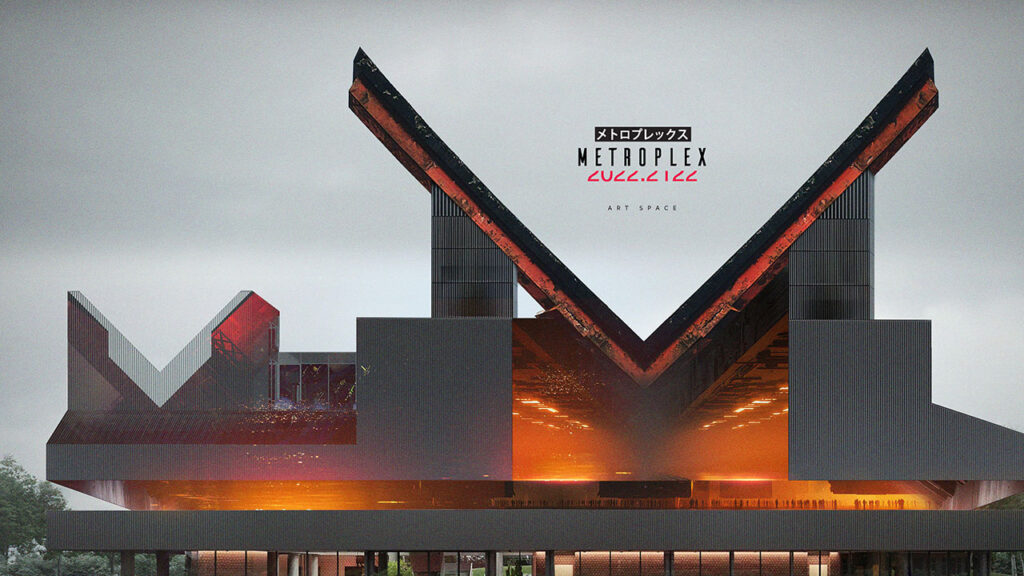
Over time, my journey has evolved from graphic design to multimedia and digital art. Founding the Metroplex 2022.2122 platform allowed me to connect creative minds across cultures, particularly between Serbia and Japan, blending artistic philosophies and pushing the boundaries of what design can achieve.
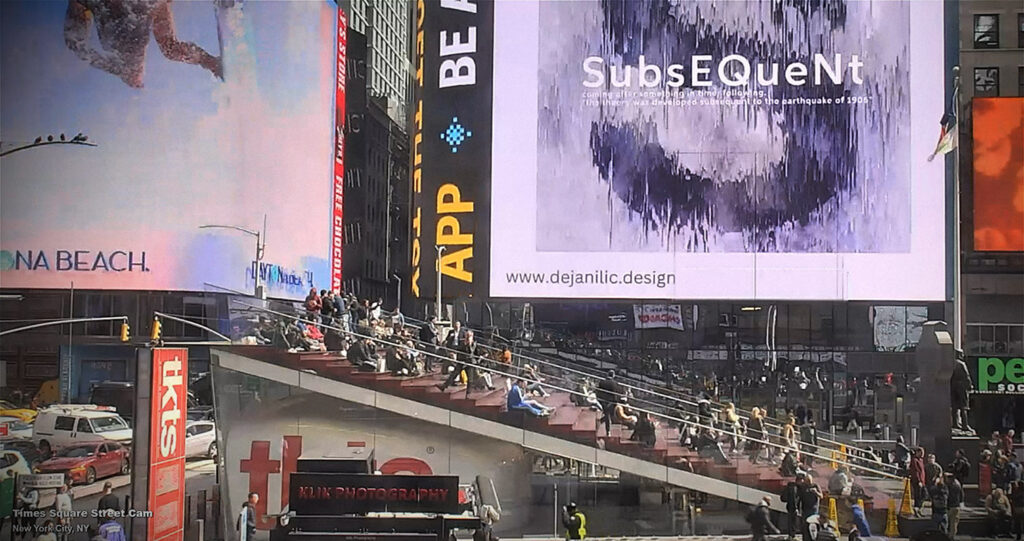
One of the most profound moments in this journey was seeing my work SubsEQueNt displayed in New York’s Times Square after it was awarded for its innovative approach in the world of poster design, seamlessly blending physical form, video, and AR elements.
Dejan Ilic / Private archive
The recognition extended beyond the award, as it was also featured in a Japanese newspaper, further affirming the global resonance of the piece. Witnessing my art projected onto one of the world’s most iconic locations was a surreal moment, celebrating the universality of creativity and the boundless possibilities of merging traditional and digital mediums.
Much like creating a video game or a cinematic masterpiece, design is about world-building. My room, my workspace, and my tools, all serve as nodes in a larger system. One that reminds me that creativity is not confined by walls or screens. It’s a force that reshapes reality, and for me. There’s no greater inspiration than knowing that I can move and expand that world with every project I undertake.
What was your creative vision for CGA Belgrade 2025 visual identity?
Designing CGA’s visual identity was like stepping into an infinite landscape, a boundless universe of visual art, programming codes, emotion, and possibilities waiting to take shape. CGA, as the Computer Graphics and Arts Conference, is inherently about transformation and innovation. It stands at the crossroads of technology and creativity, a place where the abstract becomes tangible and the future begins to reveal itself.
New visual identity for CGA Belgrade 2025
The starting point for this journey was storytelling. To truly capture the soul of CGA Belgrade 2025, I began by speaking with its founders, Miljana Jovović, Milica Božanić, and the rest of CGA team. Their insights were crucial, not just as collaborators but as architects of the vision. It was important for the entire CGA team to live and breathe the process. To experience the evolution of the visual identity as we created it. This wasn’t just about designing a brand; it was about crafting a shared narrative.
How did you approach the challenge of capturing the essence of the conference in the design?
The theme of the CGA Belgrade 2025 conference, Untitled., was both a challenge and an opportunity. It evokes a sense of anticipation, a blank slate inviting creators to step in and define the future.
With AI as a central topic in the world, we must touch it too, because of the purpose it holds. The design explores how technology shapes our creative landscape. AI, to me, is not an adversary but a collaborator, a tool that can unlock beautiful possibilities if guided with care and purpose. This concept inspired the identity: an environment that feels open-ended, alive with potential, and ready to be shaped by the people who engage with it.
Visually, I sought to create a sense of dynamic ambiguity, a space that feels unfinished yet brimming with possibilities. These fragmented textures are not mere decoration, they are the scars of progress, the echoes of analogue clashing with digital. In their flaws lies a rhythm, a pulse of movement and transformation. The design is alive, raw, imperfect, yet achingly beautiful. Every flaw, every burst of color, every fracture tells a story of boundaries broken and rebuilt.
It’s where the machine and the human hand converge, creating something neither could achieve alone. A signal to disrupt, innovate, and embrace the unknown. It reflects the era we are stepping into, one defined by rapid technological shifts yet undefined in how we will navigate them.
CGA’s visual identity isn’t just a representation of a conference, it’s a portal to something greater. Untitled. is a call to action for creators to step forward, to imagine, and to build the future together. It’s not just an aesthetic; it’s an invitation to engage with the unknown and redefine what’s possible. At its core, it challenges everyone who encounters it to not just observe the future but to create it.
Can you share a project or moment in your career that you’re especially proud of?
Countless projects have shaped my journey, but Metroplex 2024.2122 Sleeping in Peace was something truly transformative, an artistic and emotional milestone. Held on August 6, 2024, the 79th anniversary of the atomic bombing of Hiroshima, the performance was not just a tribute but a dialogue with history. It was an exploration of resilience, memory, and the boundless potential of human creativity.
The setting itself, Hiroshima’s former Bank of Japan building, became both a stage and a character in our narrative. This historic space, one of the few structures to survive the bombing, had served as a beacon of recovery, reopening to facilitate withdrawals and hosting temporary branches of financial institutions. Its legacy of unity and resilience inspired our approach as artists.
Like the Bank of Japan itself, we sought to merge different elements into a cohesive whole, bringing together creators from various artistic disciplines to collaborate in real-time.
Metroplex 2024.2122 Sleeping in Peace was more than an art piece, it was a collective act of remembrance, healing, and hope. It reinforced my belief that art is not just a reflection of the world but a tool to reshape it. On that day, in that space, I felt the profound responsibility of being an artist: to honour the past, inspire the present, and imagine a better future. That experience will stay with me forever.
How would you describe your design philosophy?
Design, to me, is a bridge, connecting the conceptual to the functional, the aesthetic to the emotional, and ultimately, the artist to the audience. It’s not just about creating something visually striking; it’s about weaving a narrative that resonates on a deeper level, transcending trends, and leaving an imprint on those who encounter it.
At the core of my philosophy lies storytelling and collaboration. Every project begins with a story, an idea, a spark, that I shape and refine through an iterative process. I approach each endeavour with fresh eyes, treating it as a world to be built, where every colour, line, and form serves a purpose.
Yet, while innovation is critical, I remain anchored to universal principles like clarity, authenticity, and resonance. A design must be more than beautiful; it must communicate, provoke thought, and inspire action.
Private archive
What guides your creative process?
Collaboration is equally essential. Much like directing a film or orchestrating a symphony, design is rarely a solitary act. I thrive on the exchange of ideas, whether it’s with fellow designers, artists, or even clients. Each perspective adds depth, transforming the work into something far greater than I could achieve alone.
I also believe in pushing boundaries. Design is not static, it evolves with time, technology, and culture. I see it as a living, breathing entity, constantly adapting to the world around it. Whether I’m crafting a brand identity, building a multimedia narrative, or creating a time-travelling performance piece like Metroplex 2024.2122 Sleeping in Peace, I approach the process with the mindset of a world-builder. Every detail, no matter how small, contributes to the larger narrative.
Technology plays a critical role in my philosophy as well. Just as a director might use motion capture to tell a story that transcends live action, I see tools like Unreal Engine or Cinema 4D as extensions of my creative process. They allow me to blur the boundaries between mediums, melding the digital with the tangible, and the real with the imagined.
Ultimately, design is about transformation. It’s the ability to take something ordinary and elevate it into something extraordinary, something that connects with people on a human level, across timelines, languages, and mediums. To design is to shape experiences, and I view every project as an opportunity to build a world that others can step into, explore, and carry with them long after.
Who or what has been a major influence on your work as a designer? Any artists, movements, or personal experiences?
My influences are a constellation of visionaries who have shaped the way I see and create. Peter Moore taught me the power of simplicity, how a single design, like the Air Jordan logo, can transcend function and become a cultural icon. Daito Manabe’s fusion of art, technology, and human experience inspires me to push boundaries, exploring how design can be felt as much as seen.
Paul Inglis’ ability to craft immersive worlds, from Skyfall to Blade Runner 2049, reminds me that every detail tells a story. Christopher Nolan’s mastery of nonlinear storytelling and his exploration of time and perspective have profoundly influenced my approach to crafting narratives within design. His ability to layer complexity while maintaining emotional resonance pushes me to create work that is both intricate and accessible, and Isaac Asimov’s visionary narratives have shaped my conceptual thinking, showing me how to balance the future with the human condition.
All of these influences converge in my work, much like nodes in a network. They have taught me that design is not just a discipline but a way of seeing and shaping the world.
What do you find most exciting or challenging about creating visual identities for events, brands, or organizations?
The thrill lies in the act of storytelling, taking the intangible essence of an organization or event and shaping it into a visual language that transcends boundaries, cultures, and time. Every logo, every color, and every line becomes a piece of a larger narrative, one that communicates clearly while evoking emotion, sparking curiosity, and inspiring meaningful action.
The challenge, however, is the balance, distilling complexity into simplicity without losing depth. A visual identity must be a mirror, reflecting the soul of its subject, yet also a doorway, inviting people into its world. It’s about creating something timeless, yet adaptable, something that can stand firm in an ever-changing landscape while remaining true to its core.
It’s not just design; it’s world-building. I approach each project as if I’m crafting a new universe, listening deeply to the voices of its creators, understanding their vision, and ensuring every element resonates with authenticity. Whether it’s for a small brand or a global event, the goal is the same: to create something that leaves a mark, not just in the mind, but in the heart.
The most exciting part? Knowing that these visual identities don’t just represent, they connect. They become a shared language, a node where ideas and people converge. That is the magic of design, it transforms the invisible into something tangible, yet infinite in its potential.
How do you stay inspired and continue to grow creatively in a fast-changing industry?
Inspiration is a living thing, a flame that must constantly be fed with curiosity and exploration. To stay inspired in an industry that evolves at the speed of thought, I make it a point to remain open, absorb, and adapt. I see the world as a vast archive of ideas, where exhibitions, travel, and teaching become opportunities to learn and grow. Whether it’s attending events at Epic Games and 3Lateral or immersing myself in the immersive worlds of teamLab, I’m constantly seeking out spaces where art and technology converge in innovative ways.
Modern art, movies, and music are among my richest sources of inspiration. Watching films and TV series is never a passive act for me, it’s a study in storytelling. I dissect the interplay of light and shadow, the intentionality behind lighting setups. But also how these elements breathe life into an environment. I immerse myself in the soundscapes, exploring how music and ambient sound craft emotional resonance and elevate visual narratives. It’s in these meticulous details, a glint of light, the swell of a score, and the depth of a shadow that I discover endless pathways for innovation.
Private archive
Any routines, hobbies, or sources of inspiration?
My routines are like rituals, anchoring me in the creative process. Sketching isn’t just a habit; it’s a way of mapping the raw data of my imagination. Reading opens doors to new worlds and perspectives. Experimenting with tools, whether it’s new software, techniques, or mediums, keeps me at the forefront of possibility.
But inspiration doesn’t always come from the expected. Sometimes it’s in the quiet moments: observing how light moves through a window, listening to the rhythms of a bustling city, or walking through a place steeped in history. These are the moments that remind me why I create, to capture the fleeting, to give form to the intangible. To share a vision that resonates beyond myself.
In a world where change is the only constant, staying inspired is about embracing that change. It’s about looking at every shift in the industry as an opportunity to evolve, push boundaries, and redefine what’s possible. For me, inspiration is not just a spark; it’s a journey, a continuous process of exploration, reinvention, and discovery.
If you could design for any dream project or collaboration, what would it be and why??
A dream project for me would be a collaboration with Daito Manabe and Christopher Nolan. The two creators who have profoundly shaped my perception of time, technology, and the human experience. Daito’s innovative approach to integrating data, human movement, and interactive technology mirrors the kind of cutting-edge experimentation I thrive on. Christopher Nolan, on the other hand, has an unparalleled ability to explore the complexities of time, memory, and perspective, crafting narratives that linger in the mind long after the experience.
Together, we could create something transformative, a platform that merges art, technology, and narrative into a seamless, interactive experience. Imagine a project utilizing neural interfaces and real-time data mapping, where users could traverse through layers of time and memory in an immersive, nonlinear space. It could incorporate AI-generated visuals, synchronized biofeedback systems, and cinematic storytelling to explore concepts like the strings of life, the interconnectivity of human experiences, and the mysteries of the unknown future.
This kind of project wouldn’t just be about entertainment, it would be a new form of digital storytelling. It would challenge how we perceive reality, technology, and our place within a rapidly evolving world. Much like both Daito and Nolan do in their respective mediums.
If you stay until the end,
See you at CGA Belgrade 2025, from the 10th to the 11th of April.
We use cookies to ensure that we give you the best experience on our website. If you continue to use this site we will assume that you are happy with it. For any concerns read our Privacy Policy